
With more people working from home, indoor health has become a major priority.
One growing concern is “sick building syndrome,” which occurs when bacteria, dust, pollen, viruses, biogrowth, and microbes circulate through a home and cause recurring illness.
There are several ways to reduce airborne contaminants, and UV air sanitizers are one option. But how do they work, and how effective are they? Here’s a clear breakdown of what you need to know.
An Ultraviolet Background
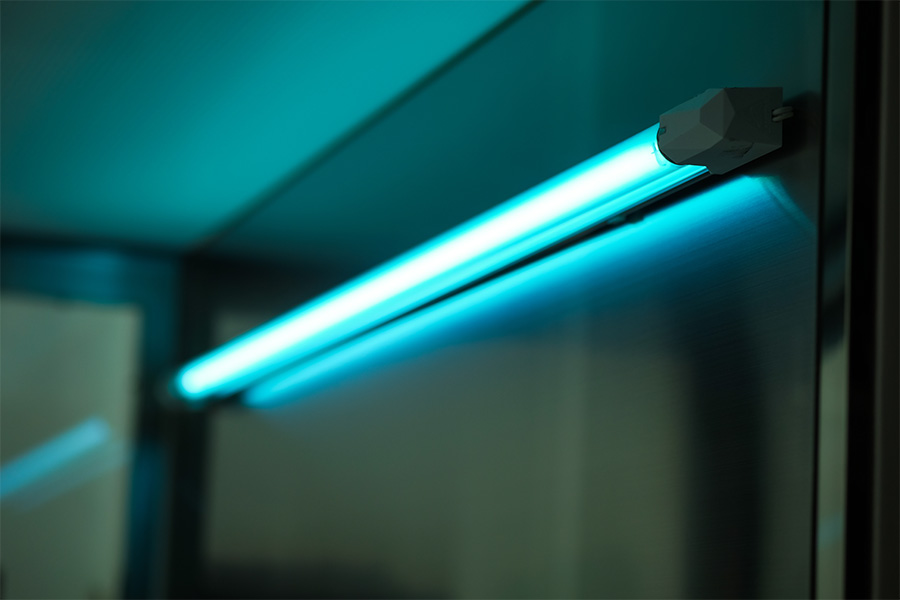
UV air sanitizers use ultraviolet light, specifically UV C light. UV rays are the same rays that cause sunburn and the reason we rely on sunscreen.
To understand UV light, think of it as a waveform. The distance between waves is called the wavelength, which is measured in nanometers.
-
Visible light: 400 to 700 nanometers
-
Ultraviolet light: below 400 nanometers
Ultraviolet light is divided into three types:
-
UV A: 315 to 400 nanometers
-
UV B: 280 to 315 nanometers
-
UV C: 100 to 280 nanometers
The shorter the wavelength, the more energy the light carries. UV C has the most destructive power. Fortunately, Earth’s atmosphere absorbs most UV C rays naturally.
How UV Light Cleans the Air
UV light damages DNA. In humans, this can lead to skin cancer. In single celled organisms and microbes, it destroys them entirely. That’s why UV C systems are also known as UVGI (ultraviolet germicidal irradiation).
UV C light can kill:
-
Viruses
-
Bacteria
-
Mold and other microbes
However, it cannot remove dust, debris, or non living particles. Even when UV C kills pollen, the pollen shell may still trigger allergies.
How UV Air Sanitizers Are Installed
UV sanitizers typically include:
-
A UV C light sanitizer
-
A MERV 11+ filter to trap non living particles
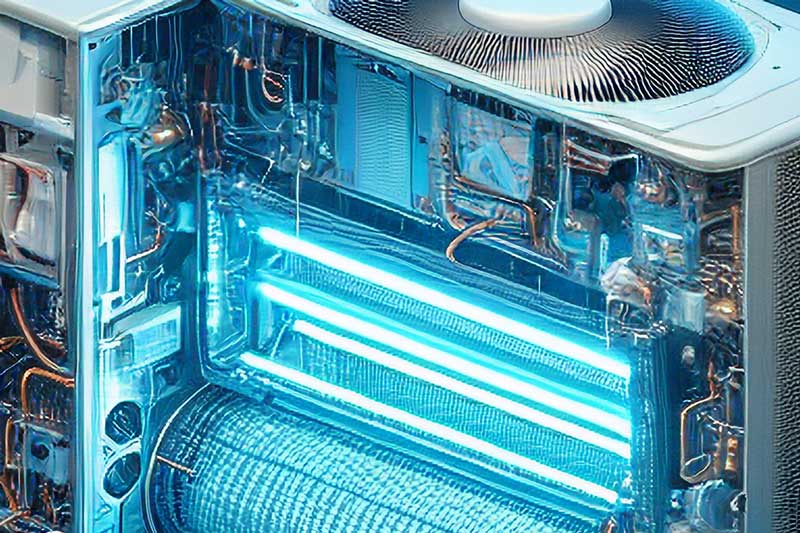
These components are installed inside your home’s ductwork so that circulating air passes through the filter and UV light.
Placement varies by system, but most are installed in the return air duct near the furnace.
What Are the Dangers of UV Sanitizers?
The main hazard is direct exposure to UV C light, which can damage skin and eyes. Fortunately, the sanitizer is contained inside the ductwork, so there is no exposure during normal operation.
How Well Do They Work?
This is the most important question, and the answer is mixed.
UV sanitizers do kill viruses, bacteria, and microbes.
However, air moves too quickly through most duct systems for UV light to work at full strength. Microbes pass the bulb in a fraction of a second.
Most real world systems kill some, but not all, microorganisms.
The good news: MERV 11+ filters that accompany UV sanitizers are extremely effective at trapping many airborne particles, including bacteria and viruses.
This combination can significantly reduce airborne illnesses.
But it’s important to understand:
-
Claims like “99.9 percent effective” refer to lab conditions, not real world airflow
-
UV sanitizers are far more effective on surfaces than airborne particles
-
They are especially helpful in areas where stagnation occurs, such as evaporator coils
Where UV Sanitizers Work Best
Evaporator coils often develop mold, bacteria, and fungal growth due to moisture. One common microbe is Aspergillus fumigatus, which can cause aspergillosis. While healthy people may not react, immunocompromised individuals can face serious risks.
UV sanitizers placed near evaporator coils can reduce this type of biogrowth and help improve indoor air quality.
Are UV Sanitizers Worth It?
They can be helpful, especially when paired with the right filtration system. MERV 11+ filters remove many of the same contaminants, but UV helps specifically with microbial growth inside your HVAC system.
UV sanitizers are particularly useful for:
-
Preventing mold and bacteria on evaporator coils
-
Reducing biogrowth that contributes to sick building syndrome
-
Improving HVAC hygiene in humid environments
Improve Your Home’s Air Quality
If you want to understand the air quality in your home and explore the best purification options, give Comfy Air a call. We offer air quality testing in San Marcos and can recommend solutions tailored to your HVAC system, duct layout, and your family’s sensitivities to dust, pollen, VOCs, and other contaminants.